Chinese Cleaver and Chuka Bocho Comparison Guide

Guide comparatif des couperets chinois et des Chuka Bocho

Comment choisir un couperet chinois ou Chuka Bocho

Les couperets chinois jouissent d'une réputation bien méritée de polyvalence en cuisine, mais ils sont en réalité disponibles dans une variété de tailles et d'épaisseurs, chacune adaptée à un éventail de tâches différentes. Certains sont d'excellents trancheurs, mais pas pour couper les os, tandis que d'autres peuvent couper les os avec facilité, mais se coinceront en coupant des légumes denses. La version japonaise d'un couperet chinois s'appelle un chuka bocho, et ces couteaux offrent encore plus d'options en termes d'aciers plus durs qui peuvent rester affûtés plus longtemps, mais qui sont moins résistants et durables. Dans ce blog, je vais décomposer les facteurs qui déterminent l'utilisation d'un couperet chinois et vous aider à choisir le bon!

Quel est le meilleur couperet chinois?

Les gens seront plus heureux et plus satisfaits avec un couperet adapté à leur usage, alors posez-vous d'abord cette question : qu'attendez-vous de votre couteau ? Si vous voulez pouvoir couper des os, quel est le plus gros que vous aurez jamais besoin de couper ? Préférez-vous un couteau plus léger ou plus lourd ? Quelle importance accordez-vous au design, à l'ajustement et à la finition ? Serez-vous prêt à essuyer un couteau en acier au carbone sujet à la rouille pendant que vous l'utilisez, à le laver dès que vous avez terminé et à laisser se développer une patine tachée ; ou préférez-vous l'entretien facile de l'acier inoxydable ?

Pour votre commodité, je vais classer les couperets vendus par Knifewear selon les critères suivants :

  • Le tranchage sera déterminé par la finesse et le tranchant. Cette catégorie concerne la façon dont le couteau coupera la viande désossée et les légumes.
  • Le hachage sera déterminé par l'épaisseur et la durabilité. Cette catégorie concerne la façon dont le couteau coupera les os et autres matériaux durs.
  • La rétention du tranchant sera déterminée par la dureté de l'acier. Cette catégorie concerne la durée pendant laquelle le couteau restera affûté.
  • La résistance à la corrosion sera déterminée par le type d'acier, la construction et la finition. Cette catégorie concerne la mesure dans laquelle le couteau se tache et sa facilité à rouiller.

Les classements seront effectués sur une échelle de cinq points, un nombre plus élevé signifiant de meilleures performances dans cette catégorie. Veuillez garder à l'esprit que ces chiffres sont relatifs aux autres couteaux que nous proposons. Un classement « faible » pour la rétention du tranchant chez Knifewear restera tout de même affûté pendant une période étonnante ! J'inclurai également des descriptions textuelles sous forme de points pour des facteurs plus qualitatifs. Pour ceux qui préfèrent regarder et écouter, consultez ma vidéo de super comparaison de couperets chinois sur notre chaîne YouTube.

Classements et guide d'achat des couperets chinois Chan Chi Kee (CCK)

Originaire de Hong Kong, CCK est l'un des principaux fabricants chinois de couperets. Si vous souhaitez en savoir plus sur eux, consultez leur article de blog sur leur profil de marque !
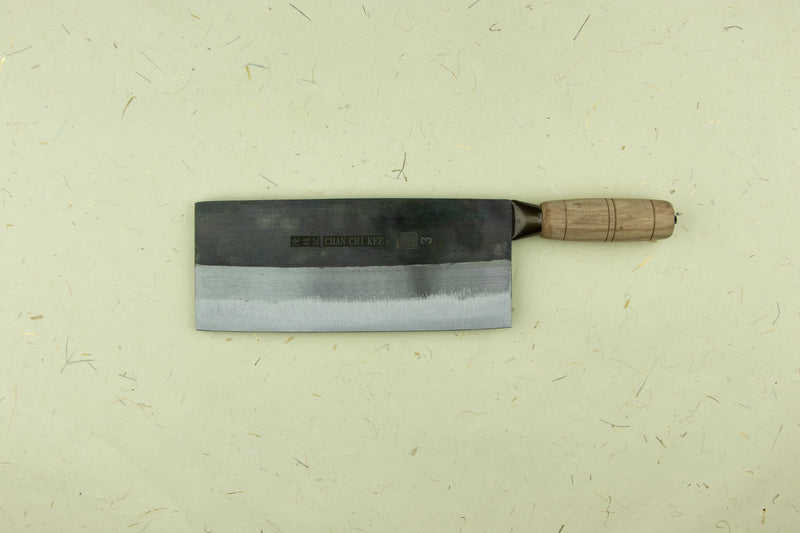
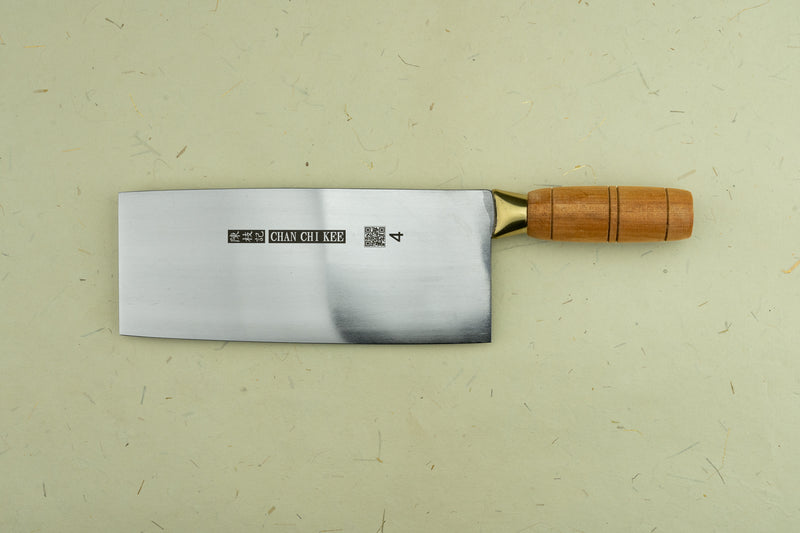
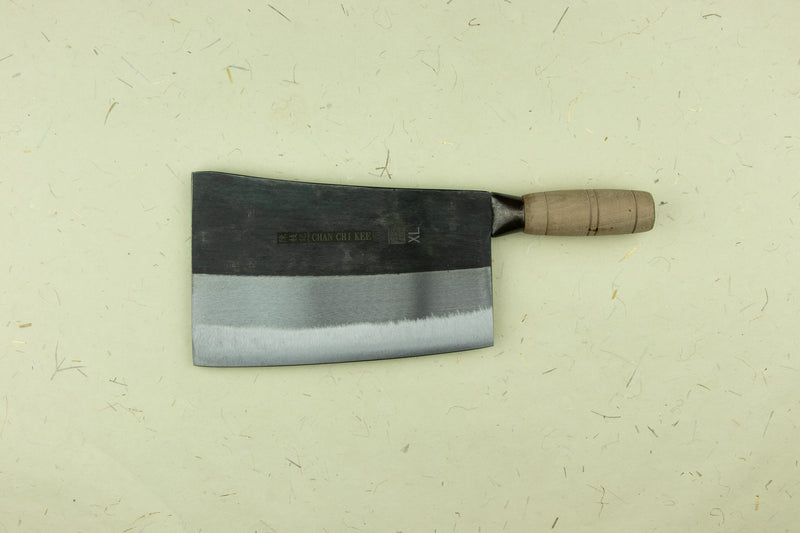
    CCK Cleaver "Mulberry Knife" Small Slicer 210mm - KF1303 from Chan Chi Kee (CCK)

    CCK Cleaver "Mulberry Knife" Petite Trancheuse 210mm - KF1303

    song dou, 桑刀 

    • CCK 1303 (a.k.a., “small slicer”)
    • Carbon steel with black “kurouchi” finish
    • Lacquered finish protects against rust but wears away over time
    • Super thin, featherweight, no bones
    • “Mulberry” means as thin as a mulberry leaf, or able to cut things as thin as a mulberry leaf, or suitable for cutting mulberry leaves into threads fine enough to feed to silkworms.

    Performance Rating

    Slicing ⭐⭐⭐⭐⭐
    Chopping ⭐
    Edge retention ⭐
    Corrosion resistance ⭐⭐⭐

    siu peen dou,小片刀

    • CCK 1912 (a.k.a., “stainless small slicer”)
    • Stainless steel
    • Thin, lightweight, no bones

    Performance Rating

    Slicing ⭐⭐⭐⭐
    Chopping ⭐⭐
    Edge retention ⭐
    Corrosion resistance ⭐⭐⭐⭐⭐

    CCK Cleaver "Vegetable Knife" Stainless Steel Chopper 195mm - KF1904 from Chan Chi Kee (CCK)

    CCK Cleaver Acier Inoxydable Petite Trancheuse 205mm - KF1912

    choi dou,菜刀 

    • CCK 1904 (a.k.a., “chopper”)
    • Stainless steel
    • Dual purpose, welterweight, chop fish or chicken bones near heel
    • “Vegetable” here actually refers to food in general

    Performance Rating

    Slicing ⭐⭐⭐
    Chopping ⭐⭐⭐
    Edge retention ⭐
    Corrosion resistance ⭐⭐⭐⭐⭐

    manh mouh dou,文武刀

    • CCK 1203 (a.k.a., “kitchen chopper”)
    • Carbon steel
    • Lacquered finish protects against rust but wears away over time
    • Workhorse, jack-of-all-trades, middleweight, chop bigger poultry bones (turkey and goose) near heel
    • “Civil/Military” means able to do fine and rough jobs

    Performance Rating

    Slicing ⭐⭐
    Chopping ⭐⭐⭐⭐
    Edge retention ⭐
    Corrosion resistance ⭐⭐⭐

    CCK Cleaver Kau Kong Chopper 205mm - KF1411 from Chan Chi Kee (CCK)

    CCK Cleaver Kau Kong Chopper 205mm - KF1411

    Kau kong dou,九江刀

    • CCK 1411 (a.k.a., “kau kong chopper”)
    • Carbon steel with black “kurouchi” 
    • Lacquered finish protects against rust but wears away over time
    • Heavy duty but versatile, light heavyweight, chop bigger bones (pork ribs) at heel
    • Nine Rivers refers to the shape of the blade, which looks like a city in China of the same name

    Performance Rating

    Slicing ⭐
    Chopping ⭐⭐⭐⭐⭐
    Edge retention ⭐
    Corrosion resistance ⭐⭐⭐

    Japanese Chuka Bocho Knife Rankings and Buying Guide

    As with most Japanese blades, chuka bocho are made from very hard steels that allow them to be sharper and to stay sharp longer than many other knives. The trade-off is that they are typically more brittle. Some chuka bocho can be used for cutting small bones, but these are either made from a slightly less hard steel than other Japanese knives or are somewhat thicker than an equivalent Chinese cleaver—sometimes both!

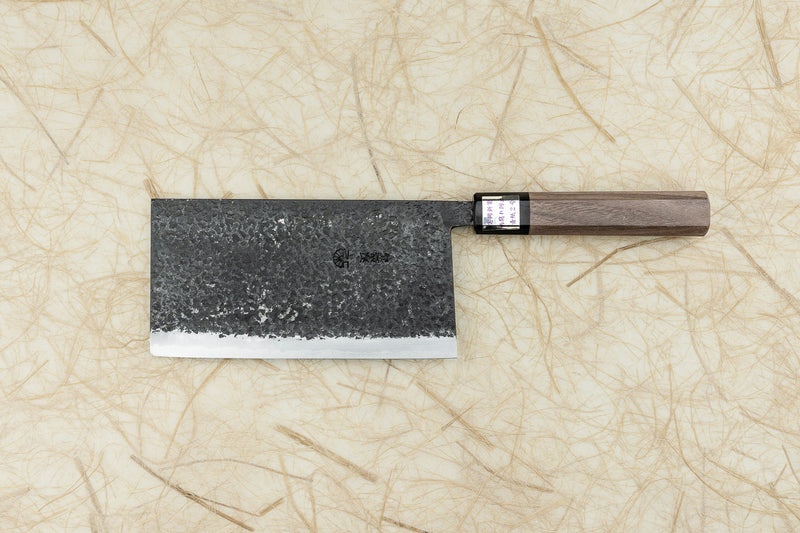
    Moritaka Ishime Mega Nakiri 165mm from Moritaka

    Moritaka Ishime Méga Nakiri 165mm

    • Carbon steel with textured black kurouchi finish
    • Will stain and can rust, but very easy to hone and sharpen
    • Very hard steel and an incredibly flat edge profile
    • No bones or other hard materials

    Performance Rating

    Slicing ⭐⭐⭐⭐⭐
    Chopping ⭐
    Edge retention ⭐⭐⭐⭐
    Corrosion resistance ⭐

    • Carbon steel with black kurouchi finish
    • Will stain and can rust, but easy to hone and sharpen
    • Super hard steel and an incredibly flat edge profile
    • No bones or other hard materials

    Performance Rating

    Slicing ⭐⭐⭐⭐
    Chopping ⭐
    Edge retention ⭐⭐⭐⭐⭐
    Corrosion resistance ⭐⭐

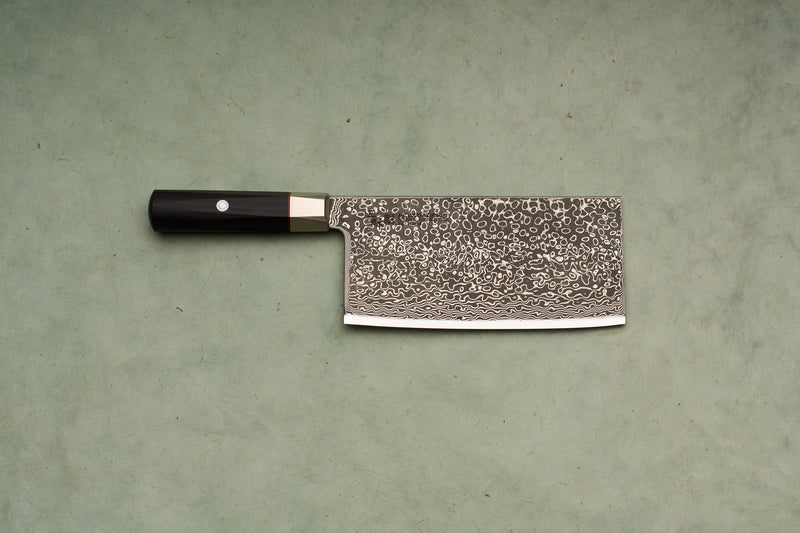
    Mcusta Zanmai Becho VG10 Couperet Chinois Damas 180mm

    Mcusta Zanmai Becho VG10 Couperet Chinois Damas 180mm

    • Stainless steel
    • Thin and hard but won’t stain or rust easily
    • No bones or other hard materials

    Performance Rating

    Slicing ⭐⭐⭐⭐⭐
    Chopping ⭐
    Edge retention ⭐⭐⭐
    Corrosion resistance ⭐⭐⭐⭐⭐

    • Carbon steel
    • Will stain and can rust, but super easy to hone and sharpen
    • Very hard steel but with a thicker spine to allow for cutting fish bones or deboning a chicken while still slicing nicely

    Performance Rating

    Slicing ⭐⭐⭐⭐
    Chopping ⭐⭐
    Edge retention ⭐⭐⭐⭐
    Corrosion resistance ⭐

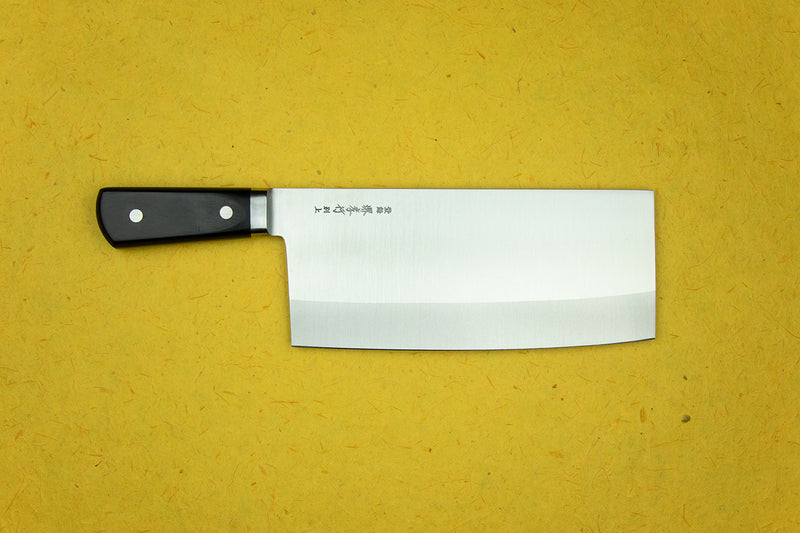
    Sakai Takayuki INOX Chuka Bocho 195mm from Sakai Takayuki

    Sakai Takayuki INOX Chuka Bocho 195mm

    • Stainless steel
    • Relatively thin but tough enough to cut small fish bones or debone poultry

    Performance Rating

    Slicing ⭐⭐⭐⭐
    Chopping ⭐⭐
    Edge retention ⭐⭐
    Corrosion resistance ⭐⭐⭐⭐⭐

    • Stainless steel 
    • Slightly thicker and tougher than other some chuka bocho, so it can cut fish bones, smaller chicken bones (ribs, wishbone), or debone poultry

    Performance Rating

    Slicing ⭐⭐
    Chopping ⭐⭐⭐
    Edge retention ⭐⭐
    Corrosion resistance ⭐⭐⭐⭐⭐

    Retour au blog
       Colin McQuire

    Colin McQuire

    Back in the day Colin cooked at a couple restaurants in Edmonton, and he used to make knives too. He later moved to Toronto and was seduced by a career in music, though he continued sharpening knives for friends and family. By night, he DJ'd and produced beats as Ronin E-Ville, and by day he taught music at several universities, all while training to become a kung fu master. Colin eventually moved to Ireland, working as a music researcher for a couple years and learning to make shillelaghs. Since returning to Canada, Colin is stoked to be getting back to his roots with knives, happily nerding-out on steels, blacksmiths, and sharpening. If you want to know about Chinese-style cleavers (chuka bocho), Colin’s your guy!